Photographing the Baltimore Holocaust Memorial
The photograph itself can be the easiest part of architectural photography. Orson Welles claimed Gregg Toland, his cinematographer on Citizen Kane, taught him everything he needed to know about camerawork in a weekend. This has demoralized generations of filmmakers ever since, but I suspect Welles meant it quite literally. The mechanics of photography aren't terribly difficult to learn, and proficiency is a function of repetition. This isn't to dismiss the benefits that come with experience and experimentation: refinement, taste, and stumbling on new solutions. But making a technically competent photograph isn't the hard part.
The hard part is relating intent and perspective. When I'm shooting an architectural project, my chief concern is deciphering and conveying what the structure is about. The photograph is subject to the subject.
The Holocaust Memorial in downtown Baltimore is an excellent example of the point. Let’s be honest: visually, this isn't Gehry's Disney Concert Hall. At first glance from across the street, it looks like a flat, grey, uninviting concrete plaza surrounded by city buildings. Perhaps just another undeveloped city lot. There is nothing inherently dazzling about it, and a standard commercial photograph trying to force a dramatic, heroic angle here would fail.
But the role of an architectural photographer isn't to manufacture a spectacle; it's to interpret and document what is actually there. And sometimes what's there is an idea in space. If the hard part is conveying intent across space, sequencing is one of the photographer's primary tools, and one of the most underappreciated aspects of architectural photography.
Certainly, there are structures designed to be understood in a single, definitive hero shot, where one intelligent frame captures the essence of the architect's vision. But complex, narrative spaces operate differently. Film editing and photographic sequencing are fraternal twins; both can create meaning through the relationships between images that no individual frame could convey. Which brings us back to the Baltimore Holocaust Memorial.
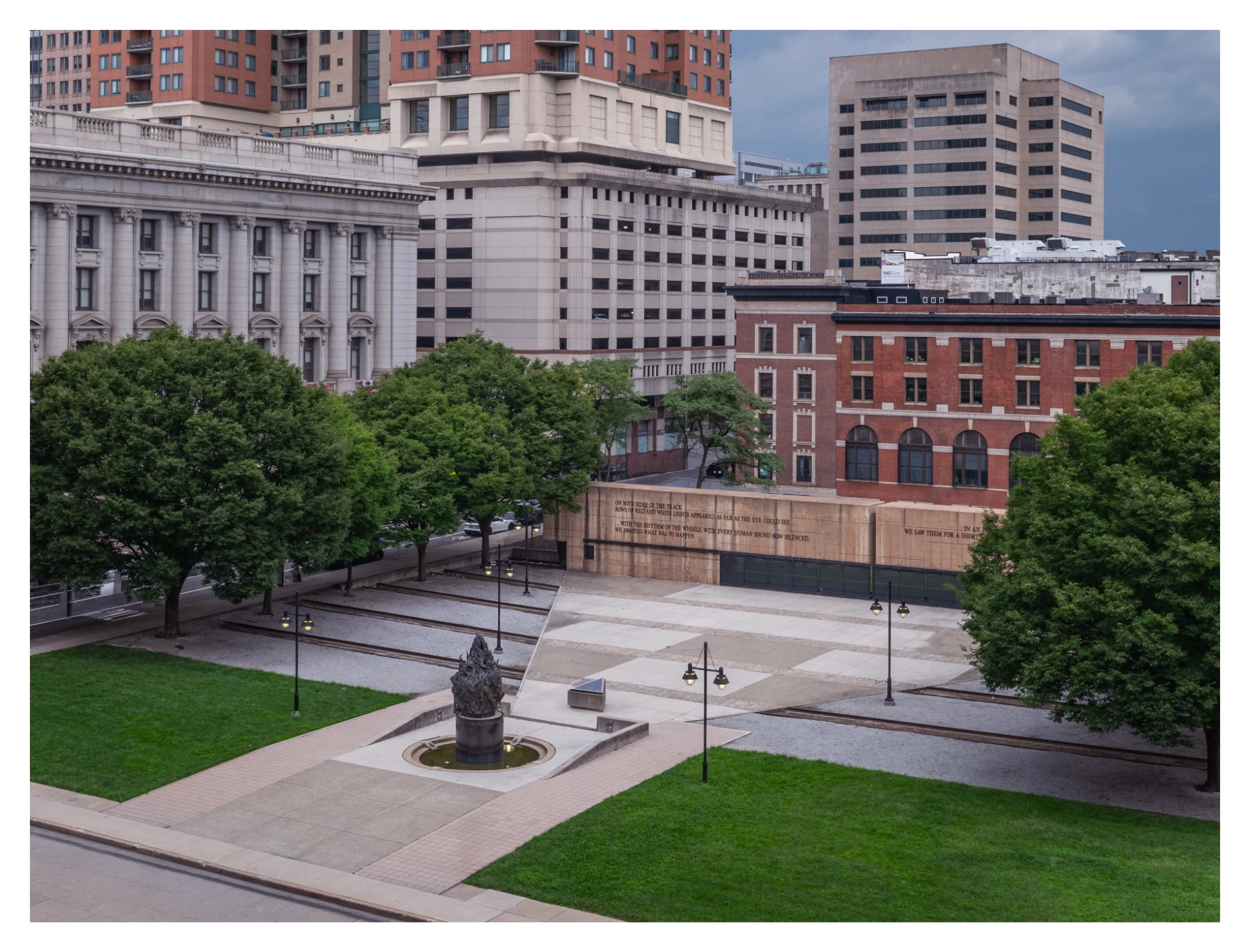
In this project's sequence I begin with a context shot (what we'd call an establishing shot in film). It places the memorial within its environment. Here, we see a low, open space surrounded by much taller buildings. But more importantly, we see that the Brutalist concrete is surrounded by life: trees and grass. The contrast is conspicuous, but its meaning isn't entirely clear from this vantage point.
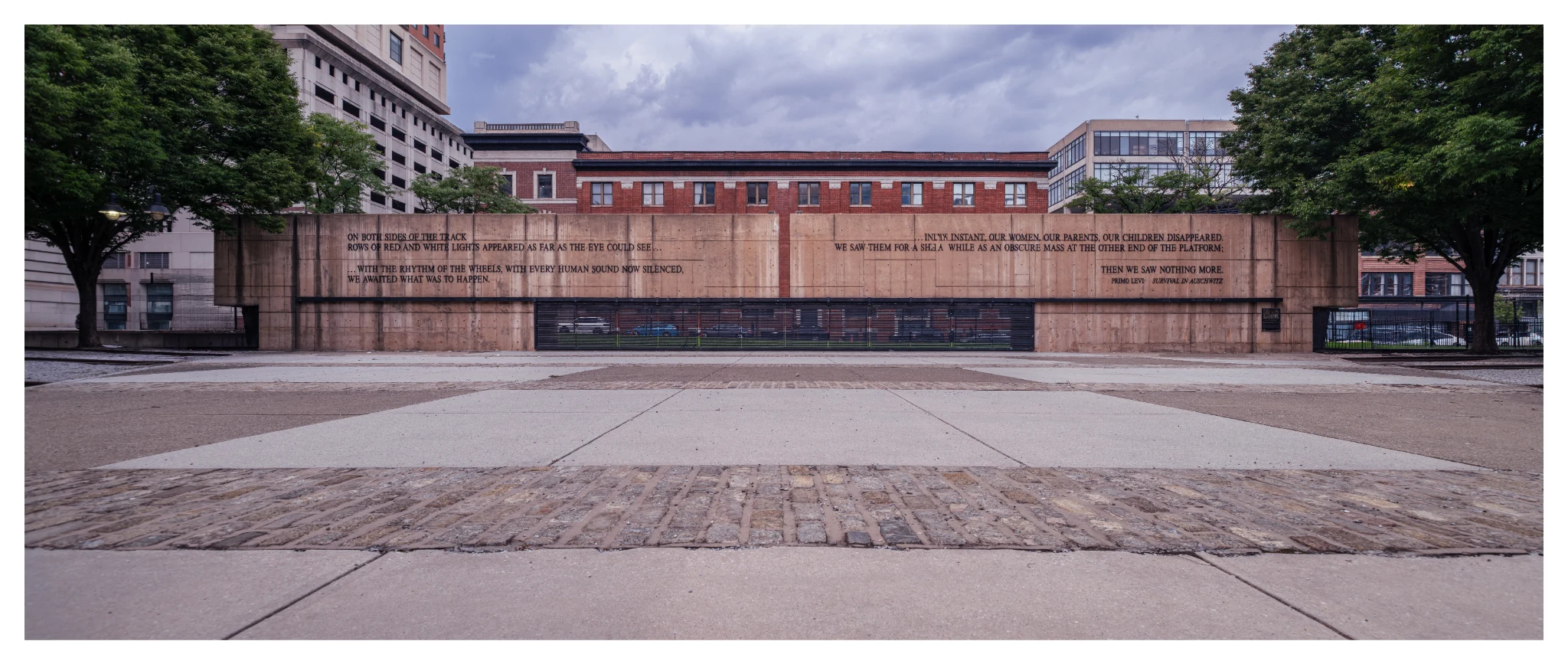
As we move down to ground level in the next photograph, we discover the titular purpose of the place. A memorial. But what are these slabs of concrete? Why the fence? Why this open concrete pad?
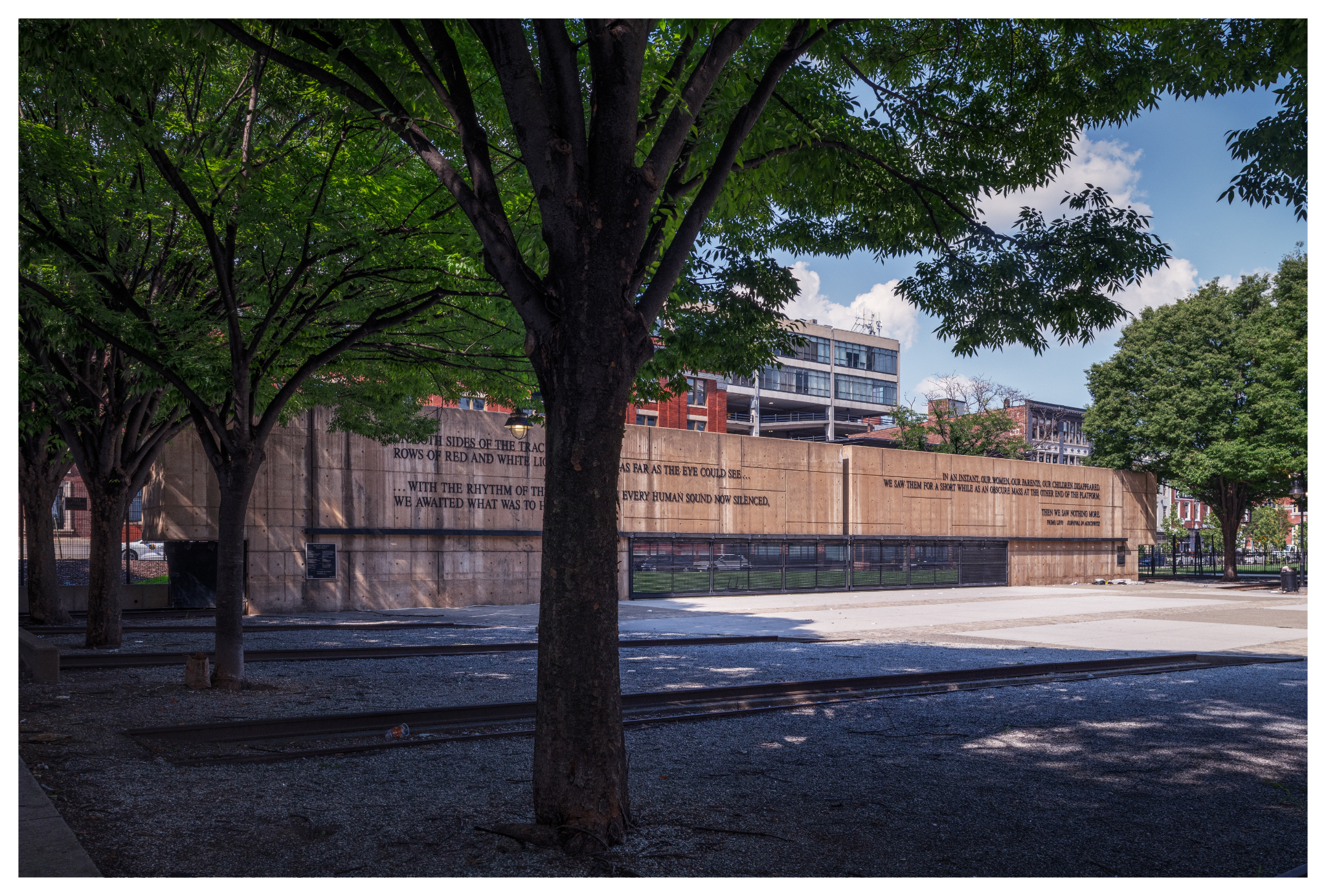
Moving the camera again, something new is revealed about this space: the lines we could see but not understand in the first photograph now resolve into sections of railroad track embedded in gravel. As we move closer to the concrete slabs, we also spot green space on the other side of the fence.
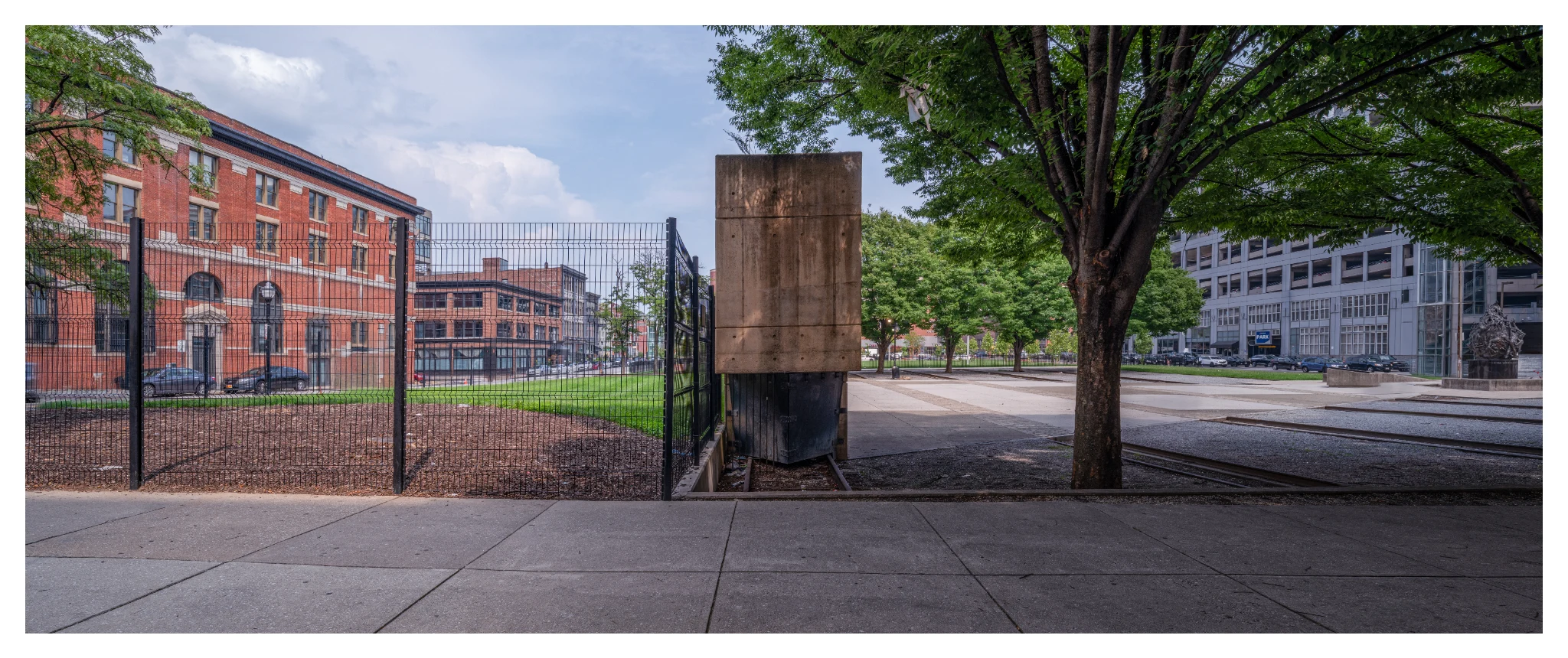
I’ve avoided talking about mechanics, but technical choices serve the perspective you are trying to reveal. In this case, a tilt-shift lens was used to capture a panoramic view of the side elevation while keeping the camera level and the vertical lines parallel, allowing the cold, brutalist train yard on the right to stand in direct opposition to the fenced-in green space on the left.
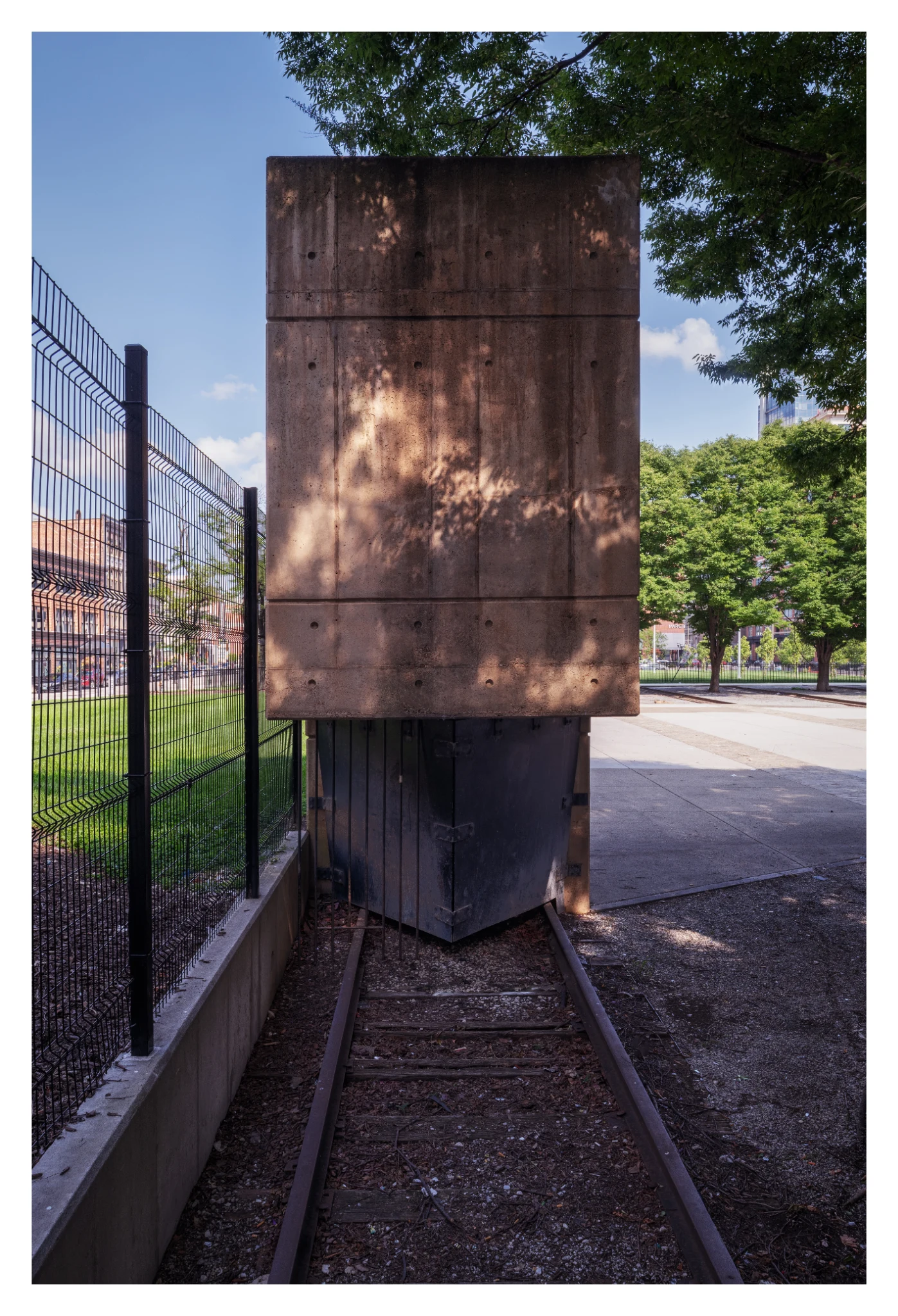
The next photograph isolates the center of the previous composition. Seen head-on, the concrete sculpture finally resolves into the front of a locomotive, complete with its cowcatcher.
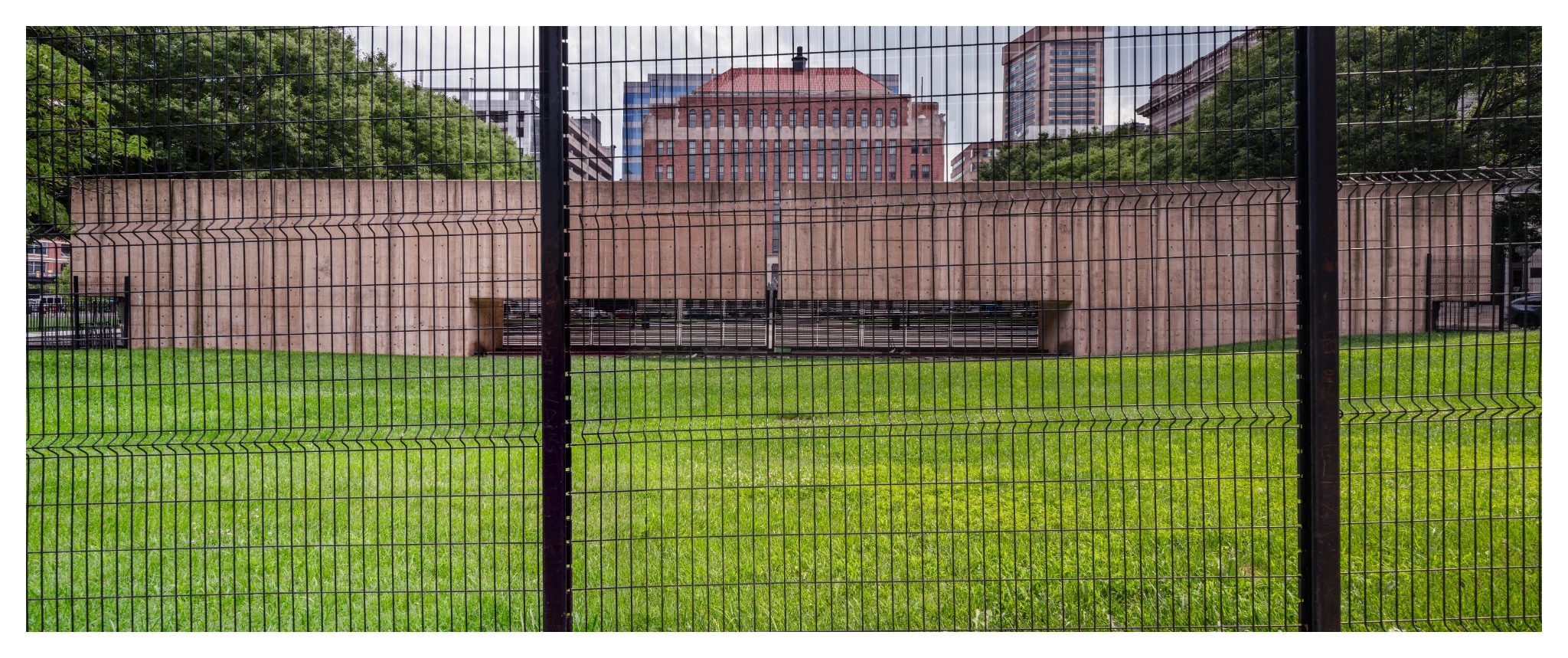
The final photograph takes us behind the memorial. Here, we discover that the green space we've glimpsed throughout the sequence is completely enclosed. We can see it, but we cannot enter.
Taken together, the photographs convey what I understood to be the memorial's central idea. In this way, an architectural photographer is (or should be) in dialogue with the designer; one perspective meeting another. The intent, as I saw it, was a narrative of arrival, progression, and ultimate confinement. Life unreachable. No single photograph could adequately convey that experience. The individual images stand on their own, but it is their deliberate sequence that fulfills the photographer's primary task: translating architectural intent into a visual phrase.